Smiling, I walked right up to them to find out what they found so funny. One simply replied, ‘Half of Defence has shown up here today. How come all of you are so worked up over a painting when this country is a mess?’
I can understand that the reaction to the Shanaakht fiasco may seem a tad disproportionate in the face of Pakistan’s myriad almost-a-failed-state problems. But, as I explained to those two men, there’s more at stake here than a painting.
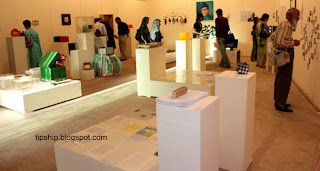
By now, several articles in the press have highlighted the real tragedy of the disruption of the Shanaakht Festival. A group of protesters, ‘sympathisers’ and members of the PPP – our champions of democracy – destroyed an exhibition space after objecting to a photomontage depicting the Bhutto family, and other politicians, in an unflattering manner. The incident betrayed the democratic credentials of the PPP because it pitted violence against freedom of expression, a prerequisite for functioning democracies.
As the organisers of the festival argued, if PPP supporters found the image objectionable, they should have peacefully lodged a complaint requesting its removal. In open societies, that’s how dialogue works.
But it seems the powers that be were not interested in engaging in the dialogue that art is meant to provoke. Sindh Information Minister Shazia Marri was ‘supportive’, but did little to keep the festival alive while Sindh Minister for Culture and Tourism Sassui Palijo decried the display of ‘objectionable portraits’ and termed the photomontage a ‘conspiracy, in the name of art, to malign the name of the Bhutto family’.
Palijo has declared that such ‘character assassinations’ of national figures will not be tolerated. Eventually, Shanaakht was cancelled because the government failed to ensure security at the Arts Council premises. That meant the show could simply not go on.
In other words, the ministers made it clear that the government would support the arts, but only when they project the viewpoint of the state. Most people would agree, however, that when art becomes a mouthpiece for the state, it is better described as propaganda. Moreover, the fact that neither minister, one of whom is an elected representative of the people, had a word to say about the importance of free expression is a sorry indication of how democratic values are perceived by our politicians.
More troubling is that the issue of free expression was not high on the priority list of those assembled at the Press Club to show their support for Shanaakht. Instead, many argued that the offending image should never have slipped past the curator’s watchful eye. They said that, in Pakistan, artists and those who provide them with a platform must remain attuned to socio-political realities and be circumspect about what work to promote.
This ‘what did they expect?’ attitude gets right at questions about the relationship between the state and art. After all, Shanaakht organisers were asking for government support (security arrangements) for artistic expressions that are critical of the government. How exactly does that arrangement work?
Since the model of private patronage for the arts faded, democratic governments have taken it upon themselves to fund and facilitate the arts. The assumption is that states believe there is an intrinsic value in art works: as forms of free expression that measure a society’s tolerance and openness; documents that map a society’s progress; tangible and exportable expressions of a cultural identity that come to represent nations in the global imagination; and, in the context of a cultural economy, revenue-earning commodities.
The benefits to governments of supporting the arts are manifold, but what of artists who find themselves dependent on the state and are understandably weary of biting the hand that feeds them? In the current model, should artists resign themselves to be nothing more than mouthpieces for the state?
Here’s where things get tricky, since democratic governments are supposed to privilege the individual above all else. The basis of good governance is the belief that individuals have certain rights that the state is meant to facilitate and protect. In that case, the artist has a right to express a personal opinion and political stance which the state is bound to support – in the spirit of democracy – even if it is contrary to the government’s interests. Ms Palijo’s outrage at the photomontage forces artists to remain ever cognisant of the economic and political forces that can either support or undermine their art.
But what use to society are artists who self-censor? Journalists in Pakistan have long self-censored their reportage, claiming that something is better than nothing. In their roles as watchdogs of the state journalists and artists are similar: the former report misdemeanors while the latter float new ideas to challenge the official position. Over time, in the absence of emboldened reporters, we have seen the government, army and intelligence agencies blatantly transgress their bounds with little fear of damning exposes. If artists are expected to be similarly cautious, Pakistan should not pretend to value democratic norms.
And yet, government officials in Pakistan continue to flirt with the arts, hopeful that the association can give them a sheen of respectability in democracy-loving circles. Gen Musharraf supported the National Academy for the Performing Arts to prove the openness of the society he governed. Recently, Prime Minister Yousuf Gilani released Rs500m to Napa, probably in a similar effort. For his part, Sindh Minister for Youth Affairs Faisal Sabzwari has offered to help Napa fund a play in an attempt to attract youngsters to the theatre and keep them away from ‘negative activities’.
If our politicians expect to reap the many benefits that the arts provide, they should develop thicker skins and deal with the fallout of vibrant artistic expression: social provocation, innovation, public interrogation and progressive thought.
Klik disini untuk melanjutkan »»


